Cubaris sp. "Panda king"
Les isopodes "Panda King" sont très répandus en terrariophilie, mais l'espèce n'a pas encore été identifiée comme une espèce connue ni décrite formellement. La plupart des sources s'accordent à dire qu'ils proviennent du Vietnam ou de Thaïlande, mais leur origine exacte reste incertaine. De plus, leur genre est parfois considéré comme un taxon fourre-tout, c'est-à-dire qu'il sert à regrouper des espèces qui ne trouvent pas leur place ailleurs. Ils pourraient être reclassés dans un autre genre ultérieurement, ou correctement identifiés d'ici là ; en attendant, ils demeureront des isopodes énigmatiques.
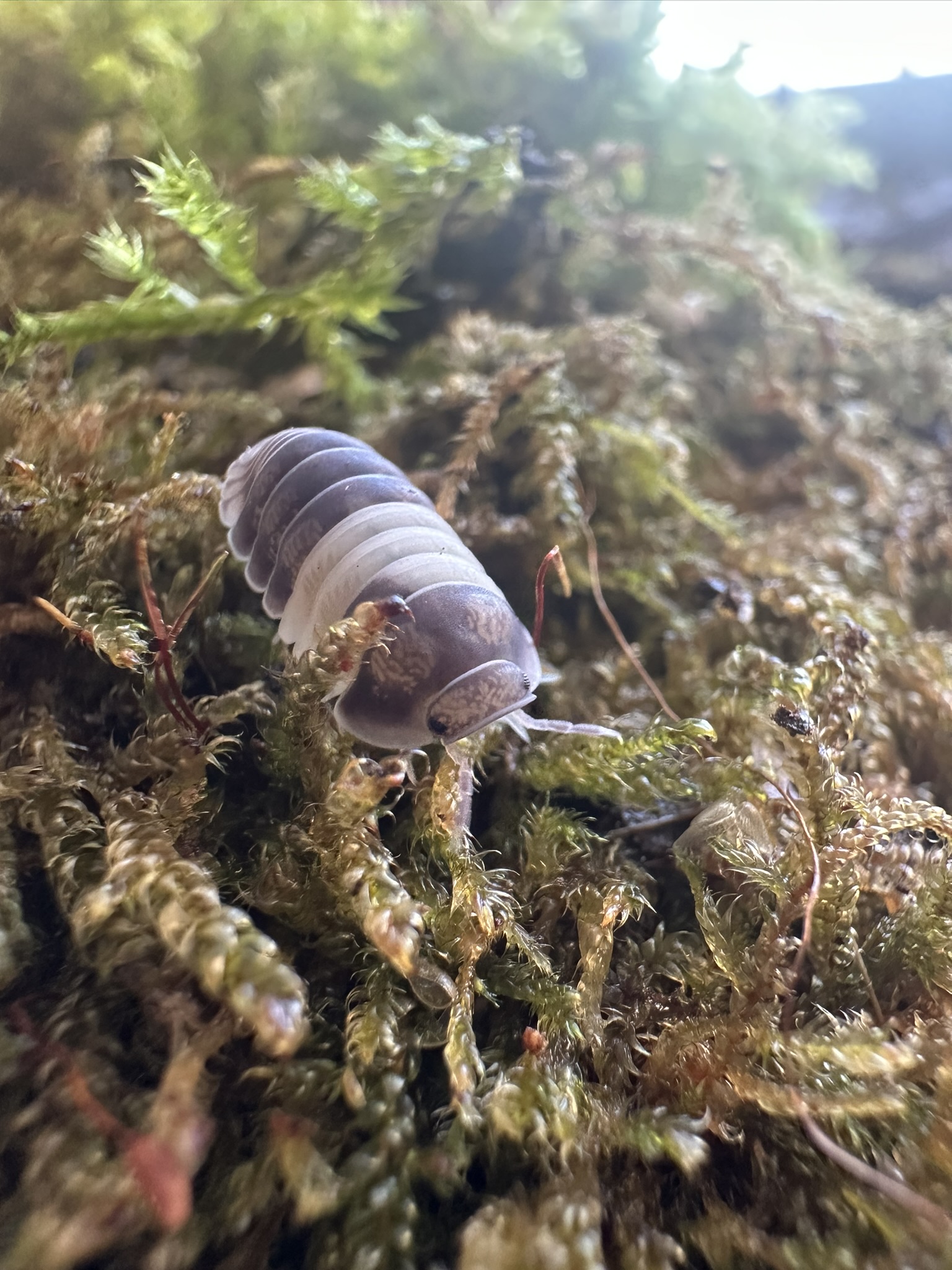
Que savons-nous donc des Panda king ? Ces isopodes ont tendance à s'enterrer et apprécient un substrat d'une certaine profondeur. Un peu timides, ils se roulent en boule (volvation) lorsqu'ils se sentent menacés. Étant donné leur nature discrète et leur mode de vie semi-souterrain, à moins de constituer une colonie initiale importante, il vous faudra faire preuve de patience pour les observer. À mesure que votre colonie grandira, vous les apercevrez plus fréquemment. Côté alimentation, ils ne diffèrent guère des autres isopodes ; ils semblent préférer les protéines en plus petites quantités que les espèces de Porcellio ou même Cubaris murina. Vous pouvez les nourrir avec des flocons pour poissons, de la spiruline et des légumes. Comme tous les isopodes, ils ont besoin d'un accès constant au calcium et à des feuilles séchées.
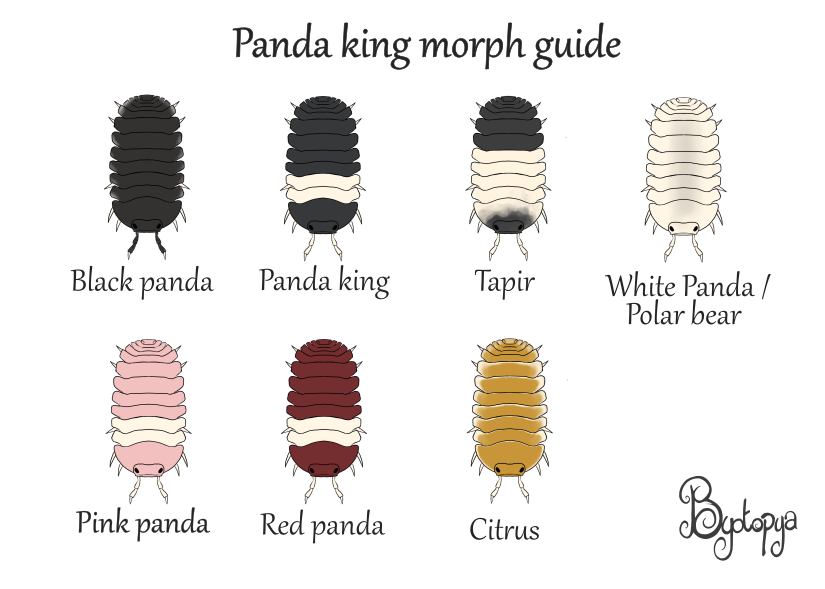
Il existe plusieurs mutations du Cubaris sp. "Panda king", toutes semblant être issues d'élevages sélectifs. Le seul phénotype sauvage semble être le panda king noir et blanc classique. La mutation blanche est parfois appelée Cubaris sp. "Polar bear".
« Le morphotype "roi du panda roux" a été développé aux États-Unis et isolé à partir d'un unique individu présentant une coloration brune », selon exuvium.net. Par la suite, le morphotype "citron" a été dérivé du "roi du panda roux", d'après weirdpets.ph et exuvium.net.